3D printing of medicines
Pharmaceutical 3D printing is an emerging technology with the potential to enable more personalised and flexible pharmaceutical care. It can make it possible to produce medicines in patient-specific doses, dosage forms or combinations, closer to where they are needed.
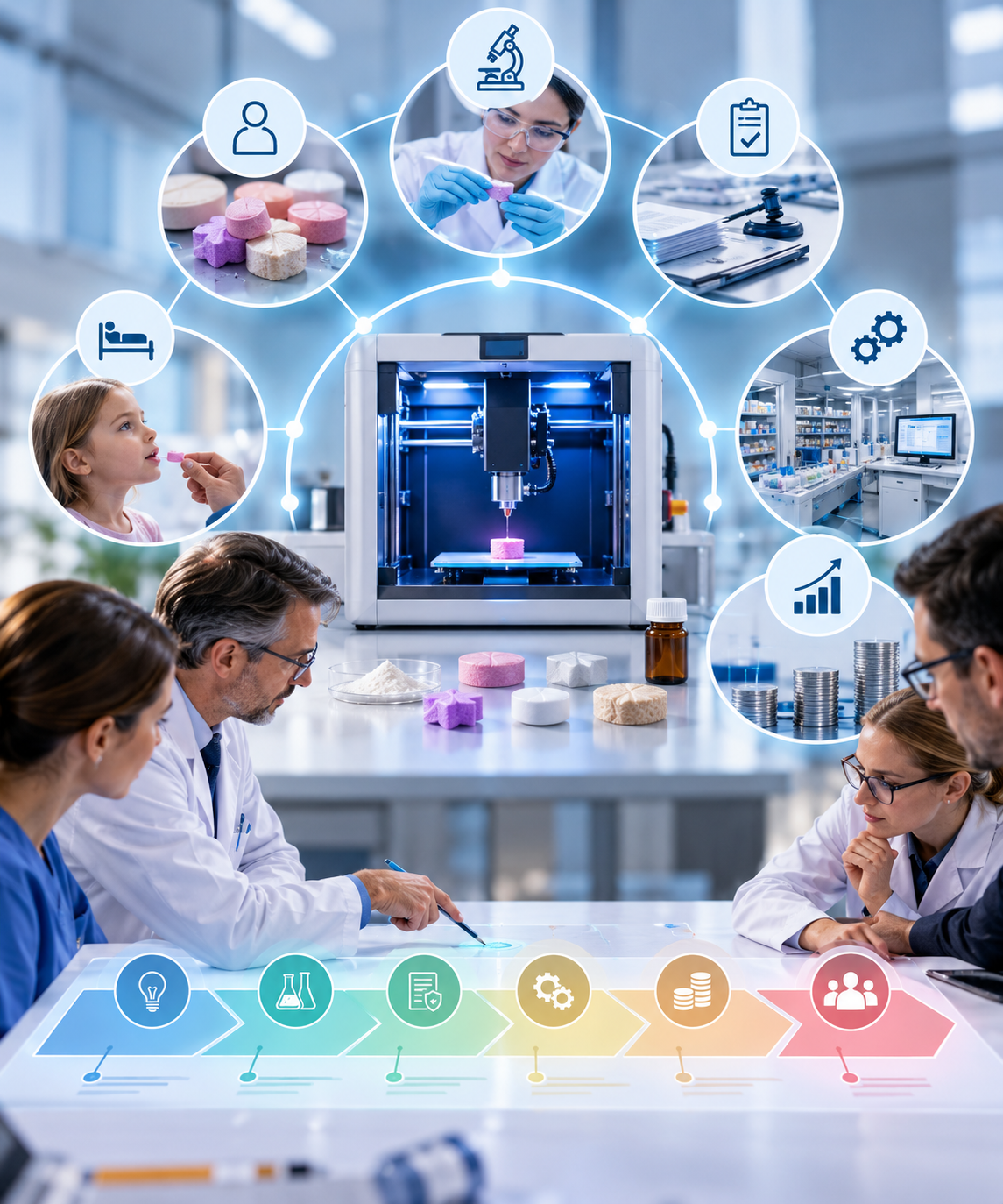
For hospital pharmacies, however, the question is not only what the technology can do, but where it adds real clinical and operational value. Implementation requires consideration of pharmaceutical quality, regulation, workflows, technology, economics and the role of the hospital pharmacy.
GPP Support helps hospitals and other healthcare organisations explore these questions and translate the possibilities of pharmaceutical 3D printing into realistic concepts and implementation strategies.
From opportunity to implementation
We can support organisations in exploring and developing pharmaceutical 3D printing from initial use case to implementation.
Our support can include:
- Identifying relevant clinical and pharmaceutical use cases
- Developing the strategy and future operating model
- Assessing organisational, technological and workflow requirements
- Developing business cases and evaluating costs and benefits
- Supporting technology and partner selection
- Bringing together hospital pharmacy, clinical, academic and technology expertise
- Supporting implementation, programme management and organisational change
Where specialist scientific, regulatory or technological expertise is required, GPP Support can bring in relevant experts from its international network.
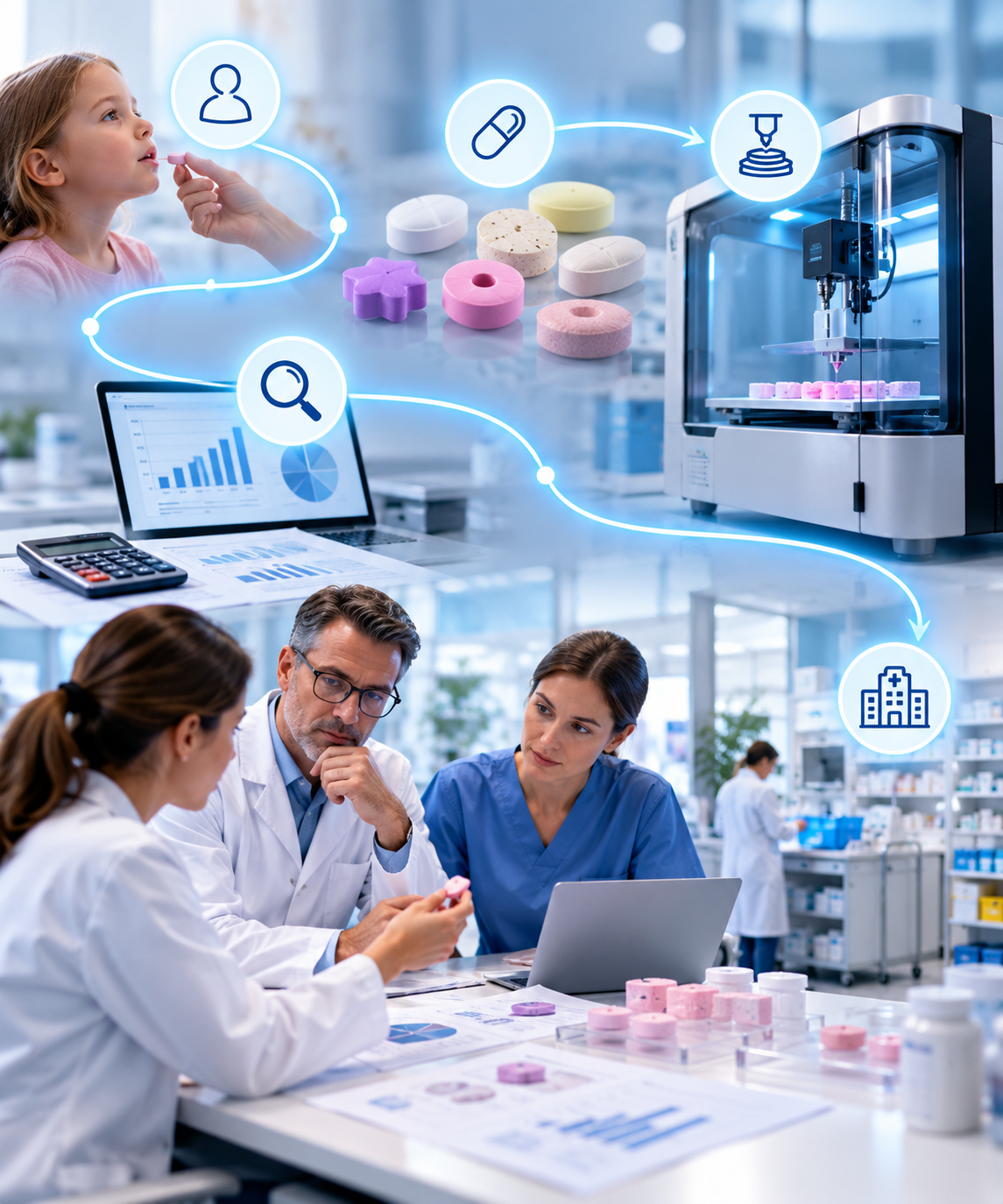
The potential of pharmaceutical 3D printing
Pharmaceutical 3D printing could enable new approaches to the preparation and personalisation of medicines, particularly where standardised products do not fully meet individual patient needs.
Potential applications and benefits include:
- Personalised doses tailored to individual patients
- Flexible dosage forms and formulations
- Production of small batches or patient-specific medicines
- Combining multiple active ingredients where clinically appropriate
- More flexible local or decentralised production models
- Supporting research and innovation in personalised pharmacotherapy
Realising this potential requires more than a printer. Technology, pharmaceutical quality, regulation, clinical needs, workflow and economic viability have to come together in a workable model.
GPP Support helps organisations make that translation from technological possibility to practical value.